

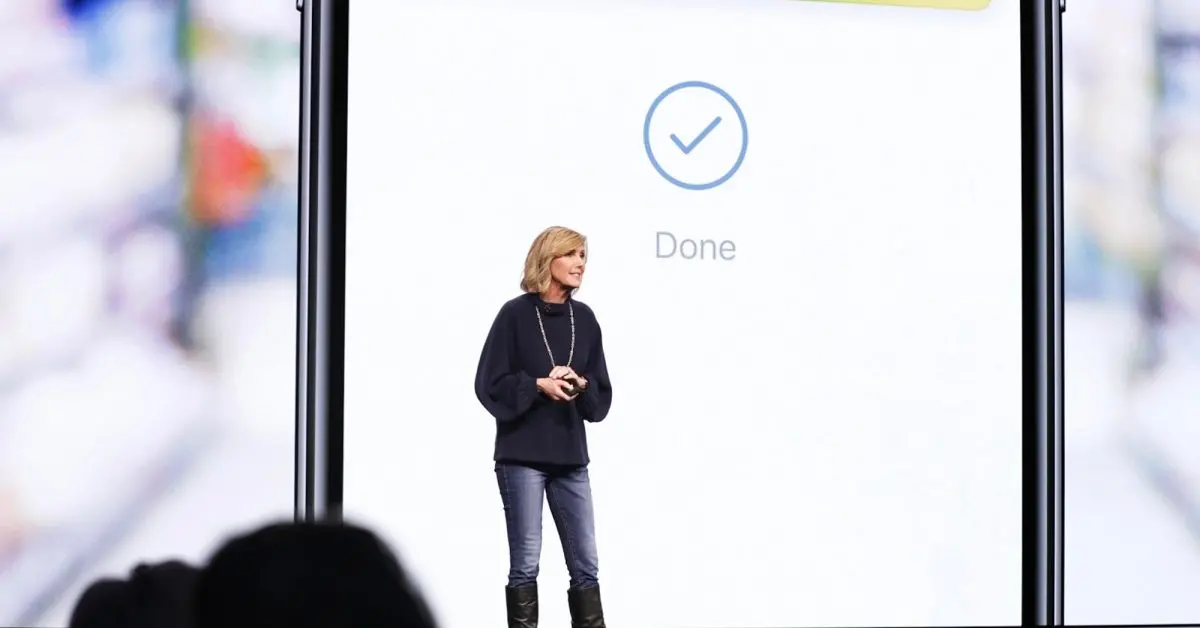
Apple’s head of Apple Pay and Wallet, Jennifer Bailey, is set to retire in October, marking the end of a more than two-decade tenure at the company. The news was shared internally via a memo from Apple’s services chief Eddy Cue, who praised Bailey’s contributions to the company’s growth and innovation. Bailey, who joined Apple in the early 2000s, has been a central figure in shaping the company’s digital payments ecosystem and its broader services strategy.
Bailey’s retirement comes at a pivotal time for Apple, which is preparing for a significant leadership transition. John Ternus is scheduled to take over as CEO from Tim Cook on September 1, and Bailey’s departure adds to a series of executive changes within the company. While the move is described as a retirement, reports suggest it is viewed as a major loss inside Apple, given Bailey’s extensive experience and her instrumental role in building Apple Pay into one of the most widely used mobile payment platforms in the world.
Career at Apple
Jennifer Bailey’s career at Apple spans more than 25 years. She joined the company in the early 2000s, a period when Apple was undergoing a dramatic transformation with the introduction of the iPod and the expansion of its retail and online store operations. In 2003, Bailey was appointed to lead the Apple Online Store team, a role that placed her at the forefront of the company’s e-commerce strategy. Under her leadership, the online store experienced significant growth and global expansion, helping Apple establish a direct-to-consumer channel that would become a critical component of its business model.
Bailey’s work on the Apple Online Store laid the groundwork for her later role in services. In 2014, she was named vice president of Apple Pay, the same year the payment platform launched. Apple Pay was introduced during a time when mobile payments were still in their infancy, and Bailey was tasked with building partnerships with banks, merchants, and payment networks to make the service widely available. Her efforts helped Apple Pay become a standard feature on iPhones, Apple Watches, and other Apple devices, supporting contactless payments in stores, apps, and on the web.
In addition to Apple Pay, Bailey oversaw Apple Wallet, which expanded from a simple digital wallet for credit cards to a comprehensive platform for boarding passes, tickets, keys, driver’s licenses, and more. Under her leadership, Apple Wallet grew to support a wide range of use cases, reinforcing Apple’s vision of replacing the physical wallet with a secure and convenient digital alternative.
Apple Pay legacy
Apple Pay has become one of Apple’s most successful services, generating billions of dollars in transaction volume annually. Bailey’s leadership was instrumental in navigating complex regulatory environments and building trust among users and financial institutions. She was also a regular presence at Apple keynotes, where she debuted new features such as Apple Cash, Apple Card, and later enhancements like Tap to Pay on iPhone, which allowed businesses to accept contactless payments without additional hardware.
Bailey’s impact extends beyond the technology itself. She championed privacy and security as core principles of Apple Pay, ensuring that payment data was encrypted and never stored on Apple’s servers. This approach differentiated Apple Pay from competitors and helped solidify consumer confidence in mobile payments. Her work also contributed to the growth of Apple’s services division, which has become a major revenue driver for the company.
The vision of replacing the physical wallet has been a recurring theme throughout Bailey’s tenure. In his memo, Eddy Cue reiterated this vision, saying, “As we continue to work toward our vision of replacing the physical wallet, I’m more confident than ever in the work that we are all doing and look forward to an exciting future ahead.” This suggests that Bailey’s successors will continue to build on the foundation she established.
Departure details
According to the internal memo, Apple will announce a succession plan before Bailey’s transition at the end of October. Bailey will remain available in an advisory role to support the transition, ensuring continuity for key projects and partnerships. The memo did not name a direct replacement, but industry observers expect Apple to promote from within or bring in an executive with deep experience in payments and financial services.
Bailey’s departure is not the only executive change at Apple. The report also revealed that Josh Rosenstock, a senior director of corporate communications focused on financial and investor PR, is leaving Apple in an unrelated move. Rosenstock’s exit adds to the list of leadership shifts as the company prepares for John Ternus to assume the CEO role. Ternus, who has served as Apple’s senior vice president of Hardware Engineering, is expected to maintain continuity while putting his own stamp on the company’s product roadmap.
The combination of Bailey’s retirement and Rosenstock’s departure highlights a period of transition across multiple functions. While some changes are natural turnover, the impending CEO succession makes this an especially significant moment for Apple’s executive team. Investors and analysts will be watching closely to see how the company manages these transitions and whether any further changes are announced in the coming weeks.
Bailey’s tenure at Apple has been marked by a series of achievements, from scaling the online store to launching and growing Apple Pay into a global payments platform. Her leadership has left a lasting impact on the company’s services ecosystem, and her advisory role during the transition should help maintain momentum. As Apple moves forward under new leadership, the foundations Bailey helped build will likely remain central to the company’s strategy.
Source: 9to5Mac News