

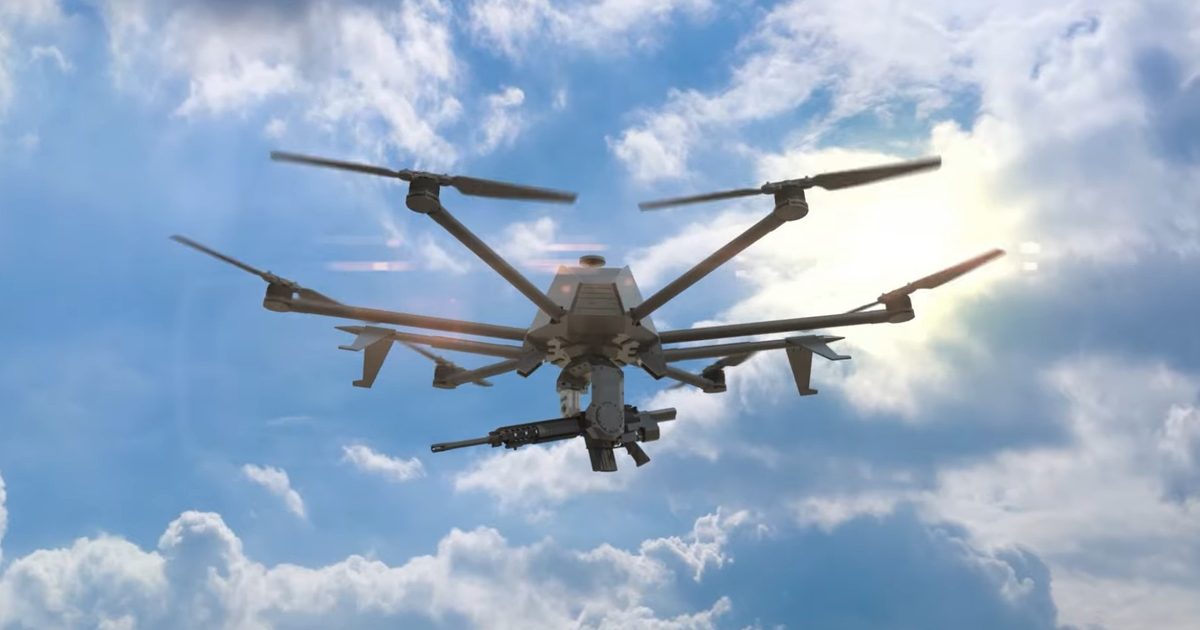
The devastating potential of artificial intelligence has long been theorized in films and academic papers, but reality has now delivered a grim milestone. In the chaos of the war in Ukraine, an autonomous AI system was directly responsible for choosing the target of a drone that killed civilians. This is not speculative fiction; it is a documented event with profound implications for warfare, law, and human responsibility.
A Civilian Tragedy in Zaporizhzhia
On July 6, a Russian drone attack in Zaporizhzhia, Ukraine, killed three civilians, including a 19-year-old university student. According to investigators, the drone was not flown by a human to a specific target in the traditional sense. Instead, human operators programmed it to travel toward a gas station. Once in the area, an autonomous AI system on board selected the exact object to attack, most likely propane tanks. The drone failed to reach that target and exploded nearby, turning a military operation into a civilian tragedy.
Experts cited by the investigative report described this as the first documented case of civilians being killed by a drone using this kind of self-targeting artificial intelligence. The significance cannot be overstated: for the first time, a computer made the final decision about what to hit, and that decision had lethal consequences.
Inside the Drone's AI Brain
When Ukrainian authorities examined the wreckage, they found an Nvidia Jetson Orin computer onboard. This high-performance embedded AI platform is capable of running complex neural networks in real time, making it well-suited for autonomous targeting. Ukrainian officials said the code recovered from the system revealed the types of objects it had been trained to recognize and attack. That means the AI was not simply following a pre-programmed route; it was actively identifying potential targets based on patterns learned from earlier data.
This marks a significant departure from earlier AI-assisted drones, which generally kept a human involved in selecting the target and let software handle only the final approach. The system recovered in Zaporizhzhia went further, removing the human from the final target-selection process entirely. This autonomy is exactly what makes the incident so alarming to arms control advocates and legal scholars.
A Warning From 1979
Almost five decades ago, an IBM training manual contained a warning that feels disturbingly relevant today: "A computer can never be held accountable, therefore a computer must never make a management decision." That principle was written for business administration, but it applies with even greater force to decisions about life and death. When a computer selects a target, no one can punish it, no one can explain its reasoning, and no one can answer for the consequences.
The 1979 manual was not a work of science fiction; it was a practical guideline for an age where computers were beginning to make administrative choices. The authors recognized that accountability is essential to any decision of consequence. Today, nations are entrusting machines with far higher-stakes decisions on the battlefield, despite that warning. The Zaporizhzhia attack is a signal that humanity has crossed a threshold with no easy way back.
The Accountability Void
An autonomous weapon cannot stand trial, cannot explain its reasoning, and cannot face punishment after a wrongful death. That does not mean human responsibility disappears; rather, it becomes much more complicated to assign. Was the operator who launched the drone responsible? Was the commander who approved the mission responsible? Or were the software engineers who trained the AI system responsible for its choices? Legal frameworks for such cases are still embryonic.
International humanitarian law requires parties to a conflict to distinguish between combatants and civilians, and to take precautions to minimize civilian harm. If an autonomous system chooses a target without human intervention, who bears the obligation to ensure that this rule is followed? The question is not academic. It is now a matter of urgent debate in military academies, courtrooms, and international forums.
Ukraine Is Also Testing Autonomous Weapons
Russia is not alone in pursuing this technology. Ukraine has also tested fully autonomous systems against fuel storage sites and military equipment in Russian-occupied Crimea. The former Ukrainian defense minister told reporters that those tests had not killed civilians, but the fact that both sides in a major war are experimenting with autonomous targeting shows how quickly this technology is becoming normalized.
This is a dangerous slippery slope. Once militaries start handing targeting decisions to software, pulling that responsibility back may become increasingly difficult. The technology will only become more capable, more reliable, and more widely available. What was once a distant ethical question is now a battlefield reality.
The Proliferation of Lethal AI
The Zaporizhzhia incident is only one example of a broader trend. Around the world, military powers are developing autonomous drones, armored vehicles, and naval systems. The promise is simple: machines can react faster, process more data, and do not hesitate or suffer from fatigue. The peril is equally clear: machines lack judgment, empathy, and the ability to understand context in the way humans do.
Several international attempts have been made to negotiate limits on lethal autonomous weapons, often under the umbrella of the United Nations. These talks have been slow, and no binding treaty has yet emerged. Nations are reluctant to give up a technological edge, even in the face of humanitarian risk. The result is an arms race in which the only shared principle seems to be the need to keep a human somewhere in the chain of command.
However, the event in Zaporizhzhia shows that even a "human in the loop" can be a distant and limited safeguard. The operators set a general course, but the machine made the final call. In future systems, the human override may be removed entirely or rendered impractical by the speed of combat.
Ethical Dimensions of Machine Targeting
At the heart of the debate is a simple ethical question: is it acceptable for a computer to decide who lives and who dies? Philosophers and moral theorists have long argued that the ability to take a human life requires a level of moral reasoning that machines cannot possess. Autonomous weapons cannot understand the value of a human life, the meaning of intentions, or the nuances of proportionality.
Furthermore, AI systems learn from data, and imperfect data can lead to catastrophic errors. A system trained to recognize military vehicles might mistake a civilian truck for a tank. A system trained to target propane tanks might misidentify a residential structure. The Zaporizhzhia incident may not be an anomaly; it may be a preview of the kinds of mistakes that become more common as these systems are deployed in complex urban environments.
The Path Toward Meaningful Limits
While there is no single solution, meaningful limits on autonomous weapons are more urgent than ever. Some experts argue for a binding international treaty that prohibits fully autonomous targeting. Others advocate for strict human-in-the-loop requirements for every weapon system.
What is certain is that the status quo is no longer acceptable. The warning from 1979 has come to pass in the most lethal way possible. Computers are making management decisions on the battlefield, and those decisions have cost civilian lives. The world must now find a way to reassert human accountability before the door closes completely.
In the meantime, the families of the three victims in Zaporizhzhia must live with the knowledge that their loved ones were killed not just by a weapon, but by an algorithm. That is the grim reality of modern warfare. The technology will not disappear, and its capabilities will grow. The only question is whether humanity can muster the foresight to limit its use before the next mistake becomes even more devastating.
Source: Digital Trends News