

AI agents and the next wave of physical demand
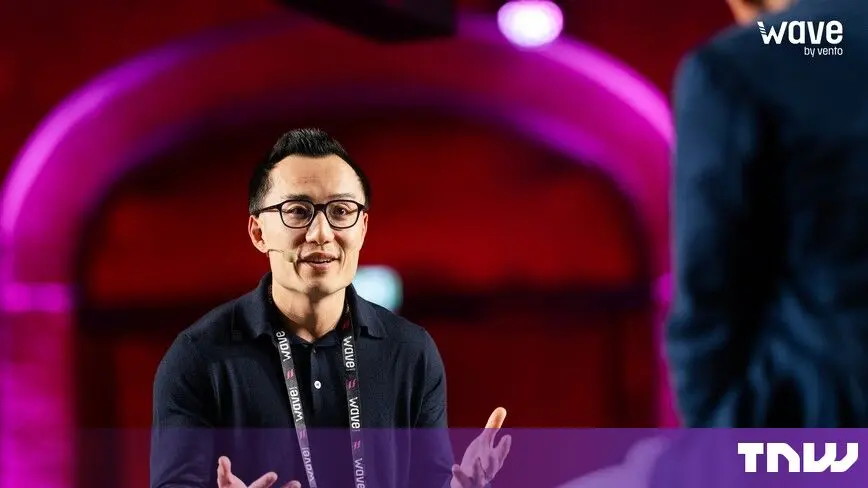
DoorDash co-founder and chief executive Tony Xu says the rise of artificial intelligence agents will not eliminate the need for physical delivery networks. Instead, he argues, it will increase demand for them, and for the human workers who help move goods through those networks. Speaking at a technology event in Turin, Italy, Xu said AI agents have probably already overtaken humans in the number of things they do on the internet. To be useful, these agents look for recurring tasks that people ask them to perform again and again. The most valuable tasks, according to Xu, are those tied to daily life and physical needs: shopping, eating, picking something up, or returning an item. As the number of agents grows, so will the demand for the physical infrastructure that can fulfil those requests, along with the human labour required to support it.
That argument cuts against a common assumption that AI will simply replace human effort. In DoorDash's view, digital automation and physical delivery are complementary. An AI agent can place an order, compare options, or manage a return, but something still has to move the item from a store, restaurant, or warehouse to a customer. The company launched an ordering agent that runs inside a major messaging app in September, a sign of how it expects AI assistants to become another interface for commerce. The more agents that act on behalf of consumers, the more orders they may generate, and the more last-mile capacity will be needed to complete them.
From a driveway experiment to a global platform
Xu said the goal of DoorDash was never food delivery alone. It was to help local business owners, including his mother, who moved from China to the United States. In 2013, almost no restaurants in the US offered delivery. He and his co-founders started by doing deliveries themselves, driving inexpensive cars around Palo Alto, where they were studying. They completed the first few hundred deliveries and kept going for two years. Xu recalled that his early accelerator application estimated $100 million of revenue in year seven, a figure he called made up. In reality, he was off by a couple of orders of magnitude, a reminder that early projections are often little more than guesses.
When there is no data, Xu said, a company has to start from a point of view. Then it should ship something quickly and collect information. DoorDash keeps the stakes low so that anyone in the company can test an idea with customers without needing approval. That philosophy helped the company move from manual deliveries to a logistics platform that coordinates thousands of merchants, couriers, and customers. It also shaped how DoorDash approaches new products, including autonomous vehicles and drones. The company treats each experiment as a way to learn, not as a bet-the-company commitment from the start.
Robots, drones, and the Dashers who remain essential
DoorDash's Dot robot can travel on roads, in bike lanes, and on pavements. Xu described it as the world's first commercial autonomous vehicle of its kind. It is running in Phoenix and has made live deliveries to tens of thousands of customers, he said. Another delivery company recently started putting robots on pavements in five towns in the United Kingdom, showing that autonomous delivery is moving from pilot projects to broader commercial tests. DoorDash also unveiled its own drone system in September, adding another mode to its delivery mix.
Building autonomous vehicles is like building three to five companies at once, Xu said. They require software, hardware, policy and permits, and operations. Vehicles break down and sometimes need to be rescued. That complexity explains why DoorDash has not abandoned human couriers. The company's Dashers remain a core part of the network, especially in dense cities, bad weather, and situations that robots or drones cannot handle. The goal is not to replace people entirely but to use automation where it makes sense and to keep humans in the loop where they are more capable.
The most important piece, Xu said, is the platform behind the vehicles. For every order, it decides whether a land robot, a drone, or a human Dasher should take it. A person and a robot can also share one route. That orchestration layer is where the real technical challenge lies. It must weigh distance, cost, speed, vehicle availability, traffic, weather, and customer expectations. It must also handle exceptions: a robot that cannot cross a busy street, a drone grounded by wind, or a courier who needs to pick up an extra item. No customer cares about the technology, Xu said. They just care about getting what they ordered. That focus on the outcome, rather than the novelty of the tools, shapes how DoorDash evaluates new delivery methods.
Relearning every city and aiming to deliver anything
DoorDash operates in 40 countries and had to learn each one from scratch, Xu said. Streets in cities such as Rome, Turin, or London are not laid out on a grid. Homes are denser, with more apartments. There are also far more small, family-run restaurants and shops than in the United States. Those differences affect everything from routing to merchant onboarding to customer support. A delivery network that works in a sprawling American suburb may struggle in a European city centre where parking is scarce, buildings have multiple units, and local businesses have their own rhythms. DoorDash has to adapt its logistics, its marketing, and its partnerships to each market.
In five years, Xu said, he wants DoorDash to be a last-mile network that can deliver anything. Every city holds tens of millions of items, he said, and no digital product yet knows where they all are. That is a huge data problem. It is also an opportunity. If an AI agent can find the item and a delivery network can move it, then the boundary between online and offline commerce becomes much thinner. A customer could ask an assistant to buy a specific product from a local shop, and the same network that delivers dinner could pick it up and bring it home. That vision explains why Xu sees AI agents as a demand driver rather than a threat. The more easily people can order, the more orders there will be, and the more physical logistics capacity will be required.
Mistakes, boards, and the discipline of low margins
Asked about his mistakes, Xu said most came when he did not trust his gut, on products and on hiring. He also sits on the board of a major social media company. The best boards ask tough questions without acting as if they run the business, he said. Founders spend 70 hours a week or more on their companies, he said, and board members about 10 hours a quarter. That imbalance means directors must be selective about where they push and where they support. Good governance, in his view, is not about second-guessing every decision but about making sure the most important risks and opportunities are surfaced.
A board member and former senior executive at a global e-commerce giant said DoorDash measures its margins in basis points, which forces attention to detail and a lack of waste. Building a business with low margins is very hard, he said. Every inefficiency, every extra mile, every delayed order can eat into profitability. That is why DoorDash invests so heavily in routing, forecasting, and automation. It is also why the company tests new delivery modes carefully. A robot or drone that lowers cost per delivery could improve margins, but only if it works reliably at scale. A platform that chooses the right vehicle for each order could reduce waste across the network. In a business measured in basis points, those small gains matter enormously.
Xu's comments reflect a broader shift in the debate over AI and work. While many discussions focus on which jobs might disappear, his view is that AI agents will create new demand for physical services and for the people who provide them. The challenge for DoorDash and its competitors is not simply building smarter software. It is building a delivery network that can handle more orders, more cities, more items, and more types of automation while still keeping costs low and customers satisfied. That is a hard operational problem, and it is one that will not be solved by AI alone.