

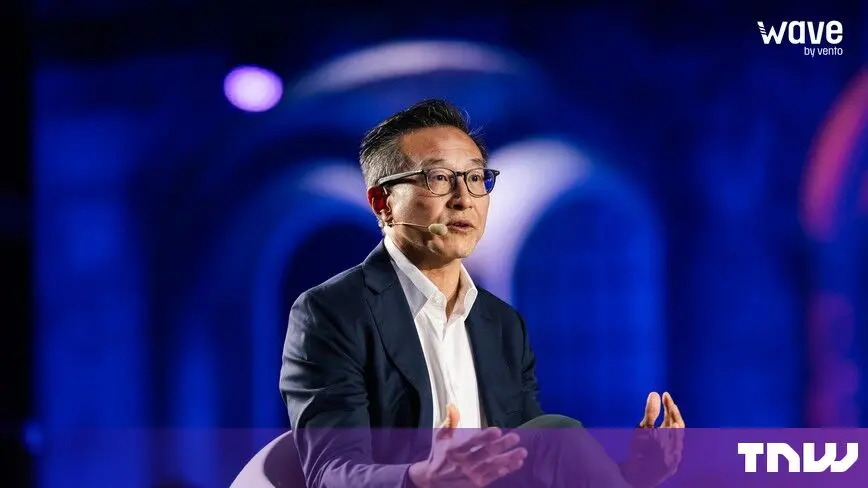
Alibaba co-founder and chairman Joe Tsai has made a forceful case for open-source artificial intelligence, telling founders and investors in Turin that it is the only viable path for Europe to achieve AI sovereignty. In a session titled “The Other Side of the Story,” Tsai argued that Europe’s industrial depth, talent base, and data reserves give it a strong hand—if it chooses openness and builds the computing infrastructure to match.
“Open source is the opportunity for Europe… That’s the approach Europe can take to truly be independent. We talk about technology independence, we talk about AI sovereignty in Europe. I think the open source approach is the only way to go,” Tsai said.
Key facts at a glance
- Joe Tsai, Alibaba co-founder and chairman, says open-source AI is the only route for Europe to achieve technology independence and AI sovereignty.
- He spoke to founders and investors in Turin on Wednesday during a session focused on the less-discussed side of the AI boom.
- Alibaba has narrowed its focus to two businesses: e-commerce and full-stack AI, from computing infrastructure to models and applications.
- The company uses about $25bn a year of free cash flow from e-commerce to fund AI and has doubled capital spending on computing infrastructure annually for three years.
- Tsai estimates US hyperscalers will invest around $1tn this year, a scale China does not match.
- US chip curbs have pushed Chinese companies to innovate, and many open-source model design and inference efficiency work.
- China accounts for about 30% of global industrial production, giving its factories valuable training data and supply-chain advantages in EVs, batteries, and robots.
- Europe has talent—20% to 30% of staff at some US frontier labs are European—but needs to get serious about data centers and computing power.
- Tsai warns no country should fully trust another country’s technology because it could be switched off after a change in government or circumstances.
- Open-weight models let companies train and run AI on their own data and infrastructure without depending on the original developer.
Alibaba’s two businesses and the AI bet
Tsai said Alibaba, founded in 1999, grew very big and lost focus over its first two decades. In 2023, it narrowed itself to two businesses: e-commerce and what he called “full-stack” AI. That runs from computing infrastructure to models to applications.
He said Alibaba uses about $25bn a year of free cash flow from e-commerce to fund the AI push. It has doubled its capital spending on computing infrastructure every year for the past three years, he said. In August, reports noted that Alibaba’s AI spending had cut its quarterly profit by 75%, a reminder of the cost of competing at the frontier.
By Tsai’s estimate, the US hyperscalers together will invest around $1tn this year, a scale China does not match. He said AI is already very good at saving people time. He put the market for knowledge-worker productivity at about $50tn.
Scarcity, open models, and China’s strategy
The conversation turned to whether limits on China, including US curbs on chip supplies, had pushed its companies to innovate. Tsai said they had, and compared it to growing up without rich parents.
“If you are scraping all along, that drives you,” he said.
He said Chinese companies open-source their work on model design and inference efficiency, and still publish papers. The closed US labs no longer publish, he said, because they do not want to share.
Tsai said China accounts for about 30% of global industrial production, and its factories hold valuable data for training models. Its complete supply chains for electric vehicles, batteries and robots give it a further edge, he added. That combination of manufacturing data and industrial breadth is difficult to replicate, and it helps Chinese AI developers build models that understand physical operations, logistics, and production lines.
What Europe should do
Asked how Europe can compete with the US and China, Tsai said the talent is already there. Europeans make up 20% to 30% of the staff at some US frontier labs, he said.
“It is not a talent problem,” Tsai said.
Instead, he said, Europe should look at demand. Its industrial companies, including those around Turin, hold factory data they would not want to send to a closed model. They could take open models, train them further on that data and run them themselves.
That approach would turn Europe’s manufacturing base into an AI advantage. Automotive, aerospace, pharmaceuticals, machinery, and energy companies all generate proprietary operational data. If they can fine-tune open-weight models inside their own data centers, they can keep sensitive information in-house while still benefiting from advanced AI.
No country should fully trust another country’s technology, Tsai said. A change of government or circumstances could see it switched off. That applies to American and Chinese technology alike, he said, so having several choices matters. In September, the ECB’s Christine Lagarde warned that Europe risks being cut off without its own AI.
Tsai compared open-weight models to a recipe that anyone can take and improve. A company can run one in its own data centre and train it on its own data. It then no longer depends on the original developer, he said. It also avoids paying for access to closed models. On Tuesday, Paris-based Mistral released its Large 4 model, which has open weights.
The missing piece, Tsai said, is computing power. Europe needs to “get serious” about building data centres, he said, to train and run models on its own infrastructure. In June, Alibaba Cloud opened data centres in France.
The second generation and the future of AI
The interviewer said part of the problem lies with his own industry. He recalled Spotify co-founder Daniel Ek telling