

Lula Defeats Flavio Bolsonaro to Win Surprise Fourth Term in Brazil
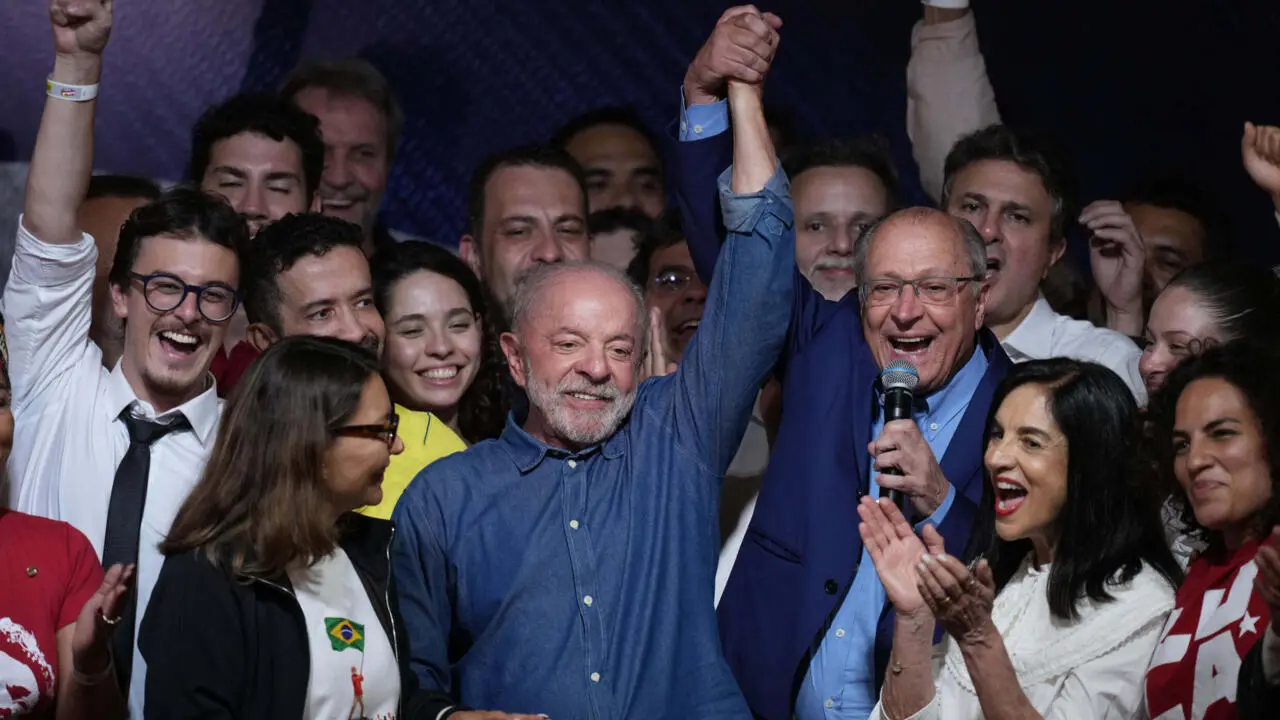
Luiz Inácio Lula da Silva has won Brazil’s presidential runoff, defeating Flavio Bolsonaro in a tight and bitterly contested vote that confounded forecasts and extended one of the most remarkable political careers in modern Latin American history. The left-wing incumbent, who is almost 81, secured 51.79 percent of the vote against 48.21 percent for the far-right senator, according to reported results after Sunday’s ballot. The outcome gives Lula a fourth non-consecutive term and keeps Brazil among the few progressive-led countries in a region increasingly shaped by right-wing victories.
Key Facts
- Lula won the second round on Sunday, October 25, 2026, with 51.79% of valid votes against 48.21% for Flavio Bolsonaro.
- The result was a reversal from the first round, when Lula trailed Flavio Bolsonaro by 45% to 47%.
- It is the first time in Brazilian history that a candidate who did not lead after the first round has won the presidency in the runoff.
- Lula, nearly 81, will be 85 at the end of his new mandate in 2030 and will have spent 16 years in the presidency, including his 2003-2010 tenure.
- Flavio Bolsonaro, the son of former President Jair Bolsonaro, has refused to recognize the result and said he will seek the annulment of the elections.
- A Supreme Court judge extended voting by two hours after an appeal from Lula’s campaign, a decision that became central to the dispute.
- Conservative parties made major gains in legislative elections three weeks earlier, limiting Lula’s room for maneuver.
The result was not merely a personal victory for Lula. It was also a signal that Brazil has not followed Argentina, Chile and Colombia into the hands of right-wing governments aligned with U.S. President Donald Trump. In a region where political pendulum swings have become frequent, Brazil remains one of the last major left-wing bastions, even as its Congress has moved sharply to the right.
Lula’s comeback was an electoral feat. After finishing behind Flavio Bolsonaro in the first round, he managed to overturn a two-point deficit and win by nearly four points. No candidate in Brazil’s democratic history had previously reversed a first-round defeat in the runoff. The turnaround was made possible by intense mobilization between the two rounds, including a powerful push on social media, door-to-door campaigning and large street demonstrations on the eve of the vote. Abstention was the lowest in 20 years, and blank and null ballots also fell, according to the figures cited after the ballot.
In his first remarks after the result, Lula said Brazilians had gone to vote because his campaign had convinced them that the ballot was essential to protecting democracy. He added that voters had defeated what he called the interference of digital platforms and promised to regulate them. The remarks underlined the degree to which the election had become a referendum not only on Lula’s government but on the role of social media, disinformation and democratic institutions in Brazilian public life.
At almost 81, Lula fought what he described as his final political battle. He presented himself as a defender of democracy and as a barrier against pressure from the United States, including commercial and diplomatic threats. His opponent, Flavio Bolsonaro, sought to mobilize the legacy of his father, former President Jair Bolsonaro, who governed from 2019 to 2022 and was convicted over an attempted coup. The campaign exposed a country still deeply divided, with competing visions of Brazil’s past, its institutions and its place in the world.
Some 160 million voters were eligible to decide whether Brazil would remain one of the last left-wing strongholds in Latin America or join the rightward wave sweeping the region. When the result was announced, crowds of left-wing supporters celebrated in São Paulo’s emblematic Paulista Avenue and in downtown Rio de Janeiro, where fireworks lit the sky. For many supporters, the victory represented not only a rejection of Flavio Bolsonaro but a defense of the democratic system that had been tested by the events of recent years.
The election day itself was marked by controversy. On the order of a Supreme Court judge, voting was extended by two hours after an appeal from Lula’s campaign team. Flavio Bolsonaro denounced what he called an abominable decision and claimed that voters had been prevented from casting ballots. He said buses had been withdrawn from circulation in cities such as São Paulo, which is led by a right-wing mayor, and Salvador de Bahia, in the northeast. The dispute over the extension became a central element of the far right’s challenge to the result.
After the result, Flavio Bolsonaro said he would request the annulment of the elections. Speaking in Brasilia with a closed expression, he declared that it was impossible to recognize the vote and that many things remained to be clarified after the judicial quarrel that had led to the extended voting hours. His refusal to concede set the stage for a new period of legal and political confrontation, even as the electoral authorities moved to confirm Lula’s victory.
For Flavio Bolsonaro, the defeat marks the end of a 24-year political career. The senator will lose his seat at the end of the year. His supporters reacted with a mixture of disbelief, anger and fear. One voter said she had learned the result as she left church and immediately cried fraud, focusing on the two extra hours of voting. Another, a 56-year-old entrepreneur, said he wanted to close his business and leave Brazil, predicting economic collapse. A third supporter argued that Lula would be unable to govern because the presidents of the Senate and the Chamber of Deputies would belong to the opposition.
Those fears reflect the difficult arithmetic facing the newly reelected president. Although Lula won the presidency, conservative parties triumphed in the legislative elections held three weeks earlier. The result leaves him with a hostile or at least heavily constrained Congress, making it harder to approve legislation and carry out the ambitious social and economic agenda that helped him mobilize support. Lula will therefore enter his fourth term with a strong popular mandate but limited institutional room for maneuver.
Reactions across the Americas came quickly. Mexico’s president, Claudia Sheinbaum, congratulated Lula and said the Brazilian people had won, describing the outcome as a victory for democracy. Cuba’s president, Miguel Díaz-Canel, called the result historic and said it guaranteed continuity on the path of peace, sovereignty and social justice. Peru’s right-wing leader Keiko Fujimori said she wanted to strengthen strategic ties, integration, cooperation and sustainable development in the Amazon shared by the two countries. Chile’s far-right president, José Antonio Kast, an ally of Bolsonaro, said he had spoken with Lula and offered congratulations, adding that Chile and Brazil had much in common and would continue to work on economic integration and the fight against organized crime.
For Lula personally, the victory crowns an extraordinary trajectory. Born into poverty in Pernambuco in Brazil’s northeast, he rose through the labor movement and became the country’s first working-class president. He already held a record: no democratically elected president had governed Brazil for as long as he has. He served from 2003 to 2010, returned to power in 2023, and will now remain in office until 2030, when he will be 85. In total, he will have spent 16 years in the presidency.
His path has not been smooth. He has confronted fatigue with his Workers’ Party, which many voters still associate with the corruption scandals that damaged it in the 2000s. Lula himself was convicted on corruption charges and spent 580 days in prison in 2018 and 2019 before the conviction was annulled on procedural grounds. He has repeatedly reinvented himself as a campaigner, and in the final stretch of this race he promoted popular and often costly measures, including a boost to Bolsa Família, the flagship social program for the poorest families.
The result nevertheless leaves Brazil deeply polarized. Lula’s supporters see his return as a defense of democracy and social inclusion. His opponents see a president with a weakened mandate, facing a conservative legislature and a public still scarred by corruption allegations and institutional conflict. The coming months are likely to be defined by legal challenges from Flavio Bolsonaro’s camp, battles over the powers of Congress and the continuing influence of digital platforms in Brazilian politics. Lula has won the presidency, but the country remains divided over what that victory means.
Source: RFI News