

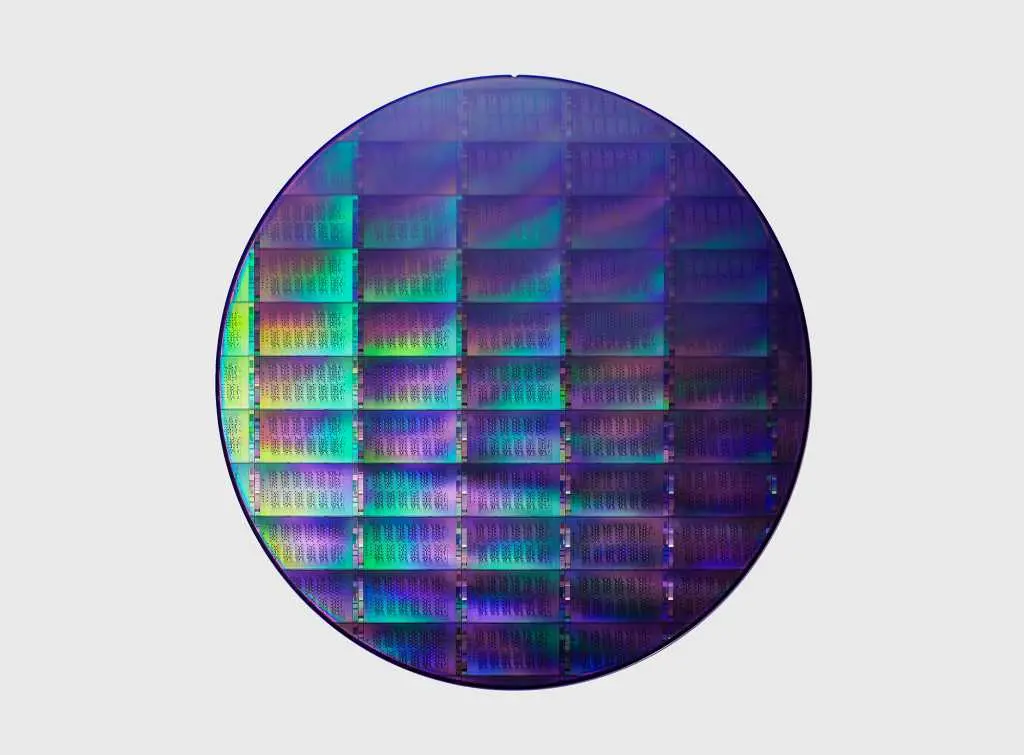
IBM and the Trump administration have announced a landmark $2 billion investment to create the first dedicated quantum chip fabrication facility in the United States. The government will contribute $1 billion, matched by IBM, to establish a new company named Anderon, which will build its state-of-the-art factory in Albany, New York. This initiative marks a significant step in the race to commercialize quantum computing, a technology that promises to revolutionize fields from cryptography to drug discovery.
IBM has been a pioneer in quantum computing for decades, with early work dating back to the 1970s and 1980s. The company’s quantum systems, such as the IBM Quantum System One, have been deployed for research and commercial use. However, manufacturing quantum chips at scale has remained a challenge due to the extreme precision required. Traditional semiconductor fabrication techniques are not directly applicable, as quantum chips rely on qubits—quantum bits that can exist in superposition—often built from superconducting circuits or trapped ions. IBM’s expertise in silicon wafer fabrication will be leveraged to develop specialized processes for quantum chips.
“Our work in silicon wafer fabrication has been a key to IBM’s success and will be critical to enable a broader quantum technology landscape,” said IBM CEO Arvind Krishna. “Anderon will be well-positioned to fuel America’s fast-growing quantum technology industry.” Indeed, the new foundry is expected to produce not only IBM’s own quantum processors but also wafers for other hardware vendors, fostering a broader ecosystem. This open approach mirrors IBM’s strategy with its Quantum Network, which allows partners to access quantum systems via the cloud.
The US government’s investment is part of a broader push to secure technological leadership in quantum computing, which is seen as critical for national security and economic competitiveness. Other companies also received funding, including GlobalFoundries, D-Wave Quantum, and Rigetti Computing. GlobalFoundries, a major semiconductor manufacturer, will likely focus on integrating quantum components into classical systems, while D-Wave specializes in quantum annealing and Rigetti in superconducting quantum processors. This multi-pronged approach ensures that the United States does not fall behind in quantum R&D, particularly as China and the European Union ramp up their own quantum programs.
Quantum computing operates on fundamentally different principles than classical computing. While classical bits are either 0 or 1, qubits can be both simultaneously, enabling parallel processing of vast datasets. However, qubits are extremely fragile and prone to errors from environmental noise. Building a quantum chip foundry requires cleanrooms with vibration isolation, ultra-low temperatures (near absolute zero), and advanced lithography to create the tiny structures that trap qubits. IBM’s Albany facility will likely incorporate these features, drawing on the company’s experience at its Watson Research Center and other sites.
The economic impact of this investment is substantial. The new factory is expected to create hundreds of high-skilled jobs in Albany, a region already known for nanotechnology research through the SUNY Polytechnic Institute. New York State has also pledged support through tax incentives and infrastructure improvements. The foundry could attract additional quantum startups and research labs to the area, creating a cluster effect similar to Silicon Valley’s dominance in classical computing.
IBM has a long history of investing in cutting-edge technologies. The company invented the first hard disk drive, the DRAM chip, and the relational database, among many other breakthroughs. In quantum computing, IBM has consistently published research papers and released open-source tools like Qiskit, which allow developers to design and simulate quantum algorithms. By opening Anderon to multiple vendors, IBM is extending its collaborative model to manufacturing, potentially accelerating the timeline for fault-tolerant quantum computers capable of solving real-world problems.
The timing of this announcement is also significant. While quantum computers currently exist only in the “noisy intermediate-scale quantum” (NISQ) era, characterized by systems with 50–100 qubits, researchers believe that thousands or millions of qubits will be needed for practical applications. Building a dedicated foundry is a necessary step toward scaling up production. IBM itself operates the largest fleet of quantum computers in the world, with over 20 systems online, but most are built in small batches. Anderon will aim to produce wafers in larger volumes, reducing costs and improving yield.
Other countries are not idle. China has invested billions in quantum research through projects like the Quantum Experiments at Space Scale (QUESS) satellite and the Beijing Quantum Information Science Research Center. The European Union has launched the Quantum Flagship program with €1 billion in funding. The US government’s $1 billion contribution is a response to this global competition, but it may also require ongoing support to maintain momentum. Past federal initiatives, such as the National Quantum Initiative Act of 2018, allocated $1.2 billion over five years for quantum R&D, so this new injection represents a significant acceleration.
For IBM, the Anderon venture also carries strategic benefits. By controlling the fabrication process, IBM can ensure the quality and security of its quantum chips, which is increasingly important as concerns about supply chain resilience grow. The company also plans to license its quantum fabrication technologies to third parties, generating additional revenue streams. This business model mirrors that of the semiconductor industry, where companies like TSMC and Samsung act as foundries for chip designers.
In summary, the $2 billion investment in Anderon represents a critical juncture in the development of quantum computing. IBM’s decades of research, combined with government backing, could accelerate the transition from experimental systems to commercial products. As the facility comes online over the next few years, the quantum computing industry will watch closely to see if this foundry can deliver on its promise to unlock the full potential of quantum technology.
Source: Network World News