

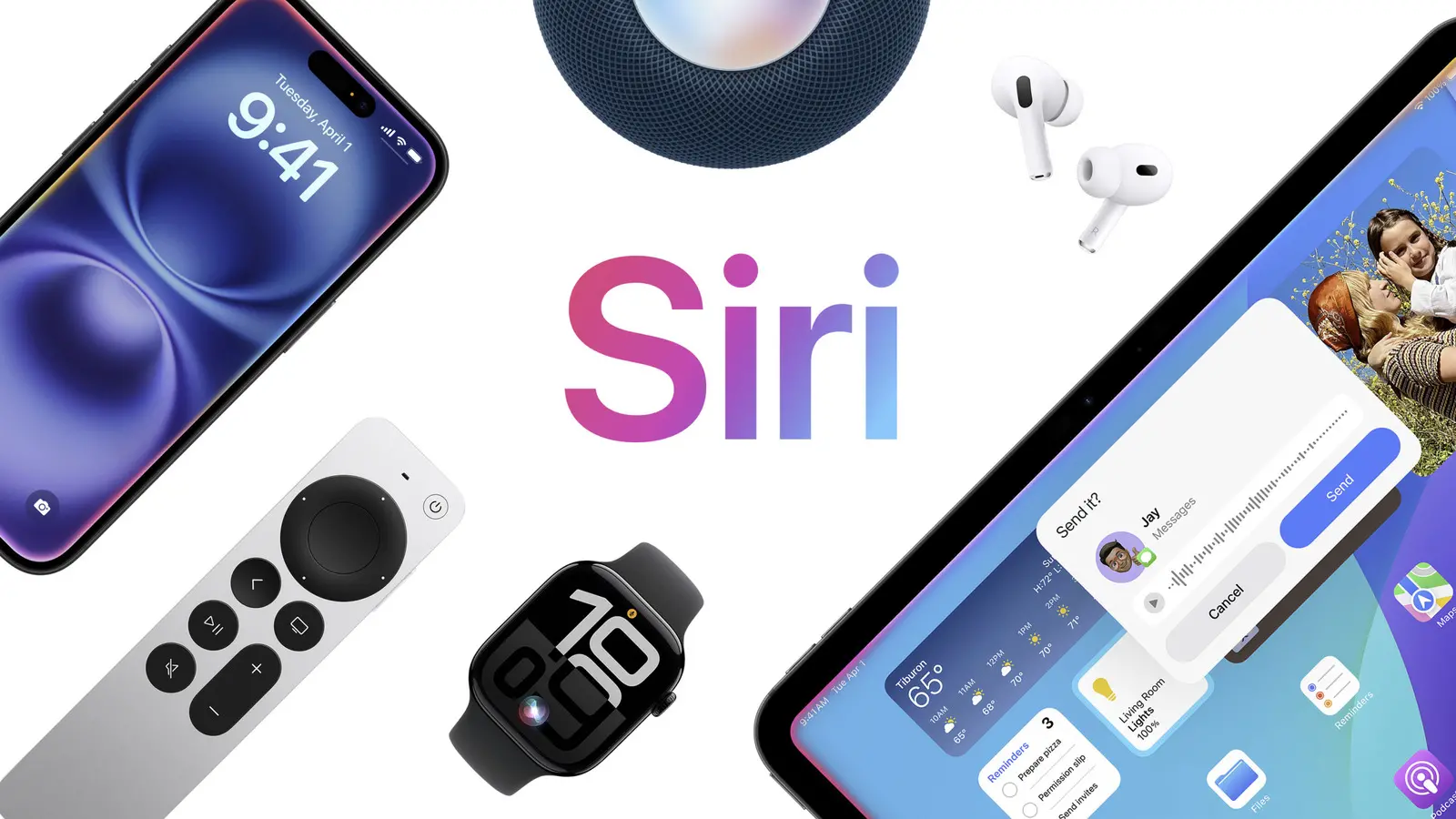
Apple has agreed to pay $250 million to settle a class action lawsuit alleging the company misled iPhone buyers in the United States about the availability of an updated, AI-powered version of Siri that was announced alongside Apple Intelligence in 2024, according to a report from The Financial Times. The settlement, if approved by a judge, will provide financial relief to a class that includes purchasers of the iPhone 16 lineup and the iPhone 15 Pro, but notably does not require Apple to admit any fault.
Background of the Lawsuit
The legal action stems from Apple's failure to deliver on a key promise made during its Worldwide Developers Conference (WWDC) in June 2024. At that event, Apple executives showcased a dramatically improved Siri—one that could understand the context of content on a user's device and take actions within apps on their behalf. This feature was touted as a cornerstone of Apple Intelligence, the company's ambitious suite of artificial intelligence capabilities for iPhones, iPads, and Macs. However, nearly two years later, the revamped Siri has not been released to consumers.
Plaintiffs argued that Apple knowingly advertised features that were not ready, thereby inducing customers to purchase new iPhones—particularly the iPhone 16 series, which launched in September 2024—with the expectation of experiencing this advanced Siri. The lawsuit claimed that Apple's marketing materials, including television commercials and online ads, created a false impression that the AI assistant would be available shortly after the phone's release. In reality, Apple has only delivered partial components of Apple Intelligence, such as text editing tools, image generation, and ChatGPT integration, while the smarter Siri remained elusive.
Timeline of Delays
Apple's rollout of Apple Intelligence was always described as incremental, but the company never publicly acknowledged a significant delay for the new Siri until March 2025—more than five months after the iPhone 16 debuted. At that point, Apple issued a statement saying that the contextual Siri update would require additional development time. Following the announcement, Apple pulled the ads that had prominently featured the enhanced assistant. The company now plans to finally deliver the new Siri this year, thanks in part to a partnership with Google that allows Apple to leverage Google's Gemini models. According to reports, the improved Siri, along with other AI features, will be included in iOS 27, expected later in 2026 or early 2027.
This timeline highlights the broader challenges Apple has faced in its AI strategy. While competitors like Google, Microsoft, and OpenAI have aggressively released generative AI tools, Apple has moved more cautiously, prioritizing privacy and on-device processing. However, that caution has also led to missed deadlines and customer frustration. The $250 million settlement, while a fraction of Apple's revenue, represents a significant acknowledgment of the harm caused by unmet expectations.
Class Action Details and Compensation
Under the proposed settlement, which must still be approved by a federal judge, eligible class members include all US purchasers of the iPhone 16, iPhone 16 Plus, iPhone 16 Pro, and iPhone 16 Pro Max, as well as the iPhone 15 Pro and iPhone 15 Pro Max. The exact amount each claimant will receive has not been disclosed, but it is expected to be modest given the large number of potential claimants. Apple has not admitted any liability, and the settlement is structured to avoid a lengthy court battle that could have exposed the company's internal decision-making regarding feature development.
Legal experts note that class action settlements of this nature are common in cases involving alleged false advertising or failure to deliver promised features. The $250 million figure is notable because it is relatively large for a consumer electronics fraud case, but it pales in comparison to Apple's cash reserves, which exceed $50 billion. For Apple, the settlement is a pragmatic move to put the issue behind it and focus on rebuilding trust with customers ahead of the eventual Siri launch.
Impact on Apple's Brand and Future AI Plans
The delay of Siri has broader implications for Apple's brand. The company has long prided itself on delivering polished, reliable software experiences, and the failure to ship a flagship AI feature on time is a rare misstep. It also raises questions about Apple's ability to compete in the rapidly evolving AI landscape, where companies like Google, Amazon, and Samsung are embedding assistants that continuously improve with cloud-based AI. Apple's emphasis on on-device processing and privacy has sometimes slowed its pace, but the company is now adapting by partnering with external AI providers like Google and potentially others.
Apple's partnership with Google for Gemini models signals a shift in strategy: rather than building all AI capabilities in-house, Apple is willing to integrate third-party models to accelerate deployment. However, this also introduces dependencies that could affect user experience and privacy, both of which are central to Apple's value proposition. Meanwhile, the delayed Siri update is expected to finally debut in iOS 27, which is likely to be announced at WWDC 2026. If successful, it could restore confidence among iPhone users, but the damage from the current episode may linger for some time.
In addition to the financial settlement, Apple has reportedly taken steps internally to better align feature announcements with development timelines. Sources within the company indicate that future product launches will be more conservative in citing specific dates for AI features, to avoid a repeat of the Siri situation. The company has also increased investment in its AI research and is rumored to be developing its own large language model that could eventually replace the reliance on Google's technology.
Reactions from Consumers and Industry Analysts
Consumer reaction to the settlement has been mixed. Some iPhone owners who purchased the iPhone 16 specifically for the new Siri feel vindicated, though many others are skeptical about the actual compensation they will receive. Industry analysts point out that the settlement may have a deterrent effect, encouraging other tech companies to be more transparent about feature availability. However, given that Apple admitted no wrongdoing, the precedent for future consumer protection claims remains unclear.
From a regulatory perspective, the case also highlights the need for clearer guidelines on how companies advertise software features that are not yet fully developed. While the Federal Trade Commission and state attorneys general occasionally pursue false advertising cases, class actions remain the primary mechanism for consumers to seek redress. The Apple settlement could encourage similar lawsuits against other companies that overpromise and underdeliver on AI capabilities.
Technical Hurdles Behind the Delay
The complexity of building a truly contextual AI assistant likely contributed to the delay. Siri must process data across multiple apps and services while respecting strict privacy constraints. Apple's approach uses on-device processing for many tasks, which limits the amount of data sent to servers but also restricts the model's ability to learn from vast datasets. Integrating Google's Gemini models will allow Apple to augment on-device capabilities with cloud-based performance, but ensuring seamless integration with iOS while maintaining security and user control is a formidable engineering challenge.
Moreover, Apple's AI team underwent restructuring in 2024 and 2025, with several key executives leaving or moving to other roles. This internal churn slowed development, according to former employees. The new partnership with Google is partly a response to those setbacks, enabling Apple to leverage proven technology while continuing work on its own in-house solutions. The timeline for iOS 27 suggests that Apple is now aiming for a stable, integrated release rather than rushing a half-baked feature.
What's Next for Siri and Apple Intelligence
Looking ahead, the next major iteration of Siri is expected to include capabilities such as: understanding the user's on-screen content, executing multi-step commands across apps, summarizing documents, and composing messages with natural language. These features were among those demonstrated at WWDC 2024 and will finally reach consumers if iOS 27 delivers on its promise. The operating system is rumored to be a major update, possibly featuring a redesigned home screen and deeper AI integration across the board.
Apple also continues to develop its own large language model, codenamed "Ajax" internally, which could eventually power Siri without external partnerships. That project remains in early stages, but if successful, it would give Apple greater control over user data and functionality. Until then, the collaboration with Google provides a bridge that allows Apple to remain competitive in the AI space while minimizing further legal risks.
In summary, the $250 million settlement is a costly but manageable outcome for Apple. It underscores the high stakes of the AI race and the importance of managing consumer expectations. As the company prepares to finally ship the revamped Siri, it will be hoping that the new assistant lives up to the hype and helps restore the trust that was fractured by the years-long delay.
Source: Engadget News