

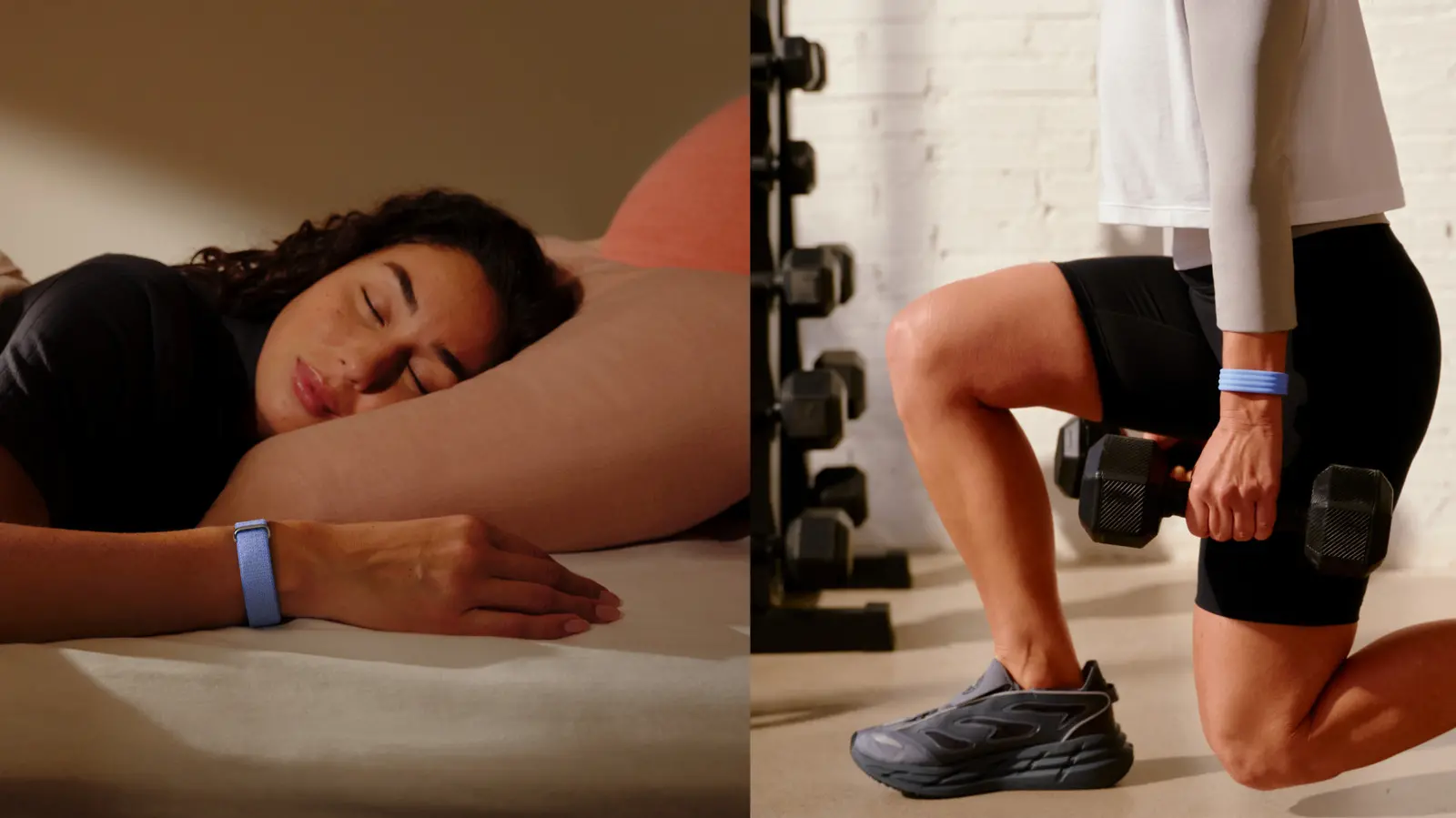
The Google Fitbit Air, a Whoop-like wearable teased earlier this year, has officially been unveiled. This screenless device is designed to be worn in various accessories, including a wristband, chest strap, or even attached to clothing, depending on the chosen accessory. Available for pre-order today at $100, the Fitbit Air represents a new direction for Google's fitness hardware: a sensor freed from the constraints of a traditional band. Named "Air" for its minimal footprint, the device is significantly smaller than previous Fitbit models. Google Health general manager Rishi Chandra confirmed that the Fitbit Air is 25% smaller than the Fitbit Luxe and 50% smaller than the Inspire 3, making it one of the most compact health trackers on the market.
Design and Comfort
At just 12 grams (0.42 ounces) with a band and 5.2 grams (0.18 ounces) without, the Fitbit Air emphasizes comfort. Google states that in an independent consumer perception study conducted last year, the device was "rated more comfortable than leading competitors" among the most popular wearables in the US. The company has engineered a "secure, micro-adjustable fit" to ensure the device remains unobtrusive whether at work, during workouts, or while sleeping. The lack of a screen eliminates the need for direct interaction, allowing users to simply wear the tracker and let it collect data passively.
Health and Fitness Tracking
As a passive wearable, the Fitbit Air continuously monitors heart rate throughout the day. Using Google's long-established algorithms, it can log sleep stages, delivery detailed insights on time spent in light, deep, and REM sleep, and assign a Sleep Score each night. The device also features irregular heart rhythm notifications to detect signs of atrial fibrillation (AFib). It analyzes heart rate variability (HRV) and helps users understand how HRV impacts overall wellbeing.
Workout tracking is simplified with auto activity detection. The Fitbit Air automatically recognizes common exercises such as biking (both stationary and outdoor), running, walking, rowing, elliptical, and other high-heart-rate sports. For more than 40 activities, users can manually start sessions through the companion app. These include aerobics, circuit training, canoeing, dancing, kickboxing, walking, yoga, and others. For activities not automatically detected or manually started, the app offers over 140 options to log, ranging from archery and assault biking to household chores. During workouts, heart rate data is displayed in real time on the user's phone.
Beyond individual session tracking, the Fitbit Air provides weekly cardio load and readiness scores, along with standard metrics like steps, distance traveled, and active minutes. The built-in vibration motor enables silent alarms, and Google's Smart Wake feature wakes users at optimal moments within their sleep cycle to reduce grogginess.
AI-Powered Health Coaching
The letters "A" and "I" in the product's name are not coincidental. Like many Google products launched this year, the Fitbit Air integrates artificial intelligence deeply into the user experience. Central to this is the Google Health Coach, which has been in public preview since October. This Gemini-powered interface allows users to have conversational interactions with the Google Health app, receiving personalized suggestions based on their health data. The Health Coach creates dynamic, tailored fitness plans that adapt to individual goals and schedules, with workout suggestions and proactive insights that respond to real-time performance data and changing daily plans.
According to Google, the Health Coach can work with a broad range of health data, including Cycle Health and vital medical information. The company emphasizes that user data remains private and secure, a critical consideration for any health-focused AI service.
Battery Life and Charging
Battery life is estimated at up to one week on a single charge. Fast charging provides up to one day of power in just five minutes of charging. A full charge from empty takes about 90 minutes. The Fitbit Air's charger is magnetic and bidirectional, mirroring the design of the Pixel Watch 4 charger, so users do not need to worry about orientation when placing the device on the dock.
Bands and Accessories
At launch, Google offers three band options. The Performance Loop Band features a micro-adjustable design for a precise fit. The Active Silicone Band is sweatproof and wetproof, designed to withstand intense workouts. The Elevated Modern Band transforms the Air into a fashionable bracelet suitable for daily wear. The device itself is water resistant up to 50 meters, though not officially waterproof. Currently, only wristbands are available, but Chandra hinted that more accessories, such as chest straps or other variations, are being considered for the future.
Special Edition and Availability
Google has also announced a special edition of the Fitbit Air created in collaboration with basketball star Steph Curry, who serves as the company's Performance Advisor. This edition features a raised interior print to increase airflow, signature Stephen Curry design details, and an additional water-resistant coating. The special edition is priced at $130. Every purchase of the Fitbit Air, including the special edition, includes three months of Google Health Premium. Orders placed now will ship on May 26.
Source: Engadget News