

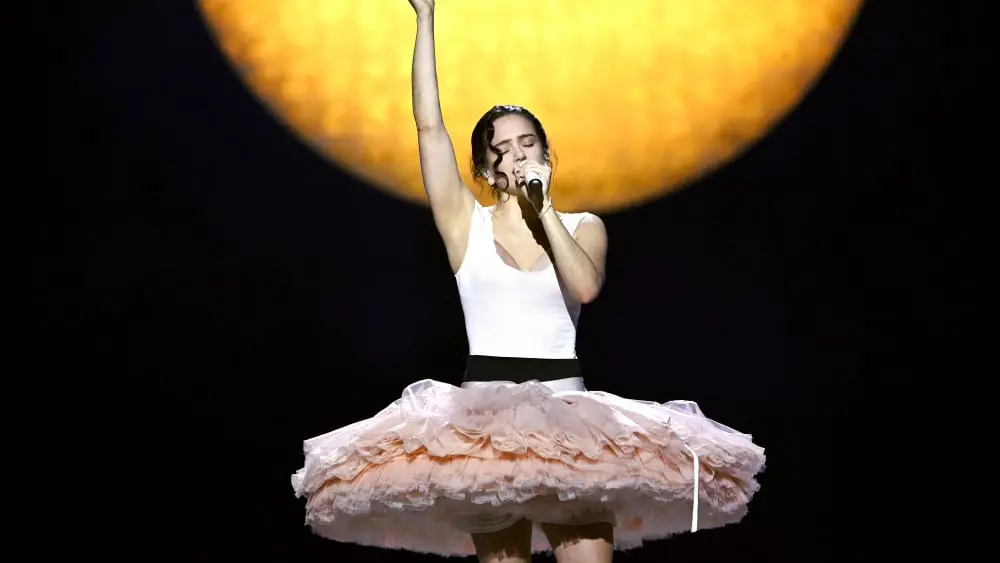
In recent years, a striking shift has taken place in the world of celebrity fashion. Stars who once relied on the biggest names in luxury—Gucci, Chanel, Louis Vuitton—are now increasingly turning to lesser-known designers, vintage boutiques, and even fast-fashion brands to craft their public images. From Rosalía’s upcycled 1940s pieces to Bad Bunny’s Zara outfits on the Super Bowl stage, the message is clear: the old rules of glamour no longer apply.
A New Era of Personal Expression
Rosalía, the Spanish sensation known for her flamenco-infused pop, has become a symbol of this transformation. For her latest tour, she collaborated with Parisian studio Les Fleurs for upcycled vintage garments, wore dark, ascetic silhouettes from Ann Demeulemeester designed by Stefano Gallici, and even showcased a dress created by fashion student Fernanda Castro. Each choice reflects a deliberate move away from the polished, logo-heavy looks that dominated previous decades. Instead, Rosalía embraces raw materials and layered references that tell a story—her story.
This pattern extends well beyond a single artist. Bad Bunny, the Puerto Rican trap star, made headlines when he wore a complete Zara outfit during the 2026 Super Bowl halftime show, a decision that sparked conversations about accessibility and authenticity. Beyoncé, while still working with luxury maison Jacquemus for her Renaissance World Tour, has also spotlighted designers like Ali Karoui and the Egyptian brand Okhtein, signaling a preference for bespoke, culturally resonant pieces. Billie Eilish and FKA Twigs similarly gravitate toward independent creators, often favoring gender-fluid, avant-garde looks that challenge traditional beauty standards.
Why the Shift? Authenticity and Cultural Roots
Industry observers point to a deeper societal trend. Jina Luciani, president of the endowment fund Maison Mode Méditerranée, explains: “This generation is in search of meaning. They need authenticity.” She notes that many of these stars come from working-class or culturally specific backgrounds—Rosalía from a Catalan industrial town, Bad Bunny from Puerto Rico—and their fashion choices reflect a commitment to their roots. “They are engaged artists,” she adds. “The clothes they wear are part of a larger message about identity and values.”
Assaad Awad, a Spanish-Lebanese designer who has created for Lady Gaga and Madonna, highlights that innovation often originates with independent designers. “Contrary to popular belief, it’s not always the big houses that innovate,” he says. “Independent creators are less bound by economic constraints and industrial cycles, so they are freer to experiment.” When a star collaborates with a lesser-known designer, the resulting outfit is almost guaranteed to be unique—a rare commodity in an image-saturated world.
The Economics of Celebrity Fashion
The financial dynamics of celebrity styling have also evolved. Designers may lend pieces for exposure or negotiate discounted rates in exchange for the visibility a star provides. Awad explains that a dress worth €2,000 might be offered to a celebrity for €1,000 because the publicity compensates for the loss. This creates a symbiotic relationship: stars gain exclusive, one-of-a-kind garments, while emerging designers gain a global platform.
However, this does not mean luxury houses are irrelevant. Jina Luciani sees the relationship as one of continuity rather than rupture. “Luxury is not about ostentation but about rarity,” she says. Maisons like Chanel, through initiatives such as the 19M space dedicated to artisanal crafts, are emphasizing transparency and skill-sharing. The focus is shifting from the logo to the process—a move that aligns with the values of younger consumers who care about how clothes are made.
Cycles of Inspiration and the Role of Stylists
Fashion and pop culture have always recycled ideas. Awad notes that the religious imagery Rosalía employs echoes Madonna’s “Like a Prayer” and Lady Gaga’s “Judas.” Similarly, the silhouettes seen today—from the 1920s, 1950s, 1960s, 1980s, and 1990s—are constantly reimagined. Fast fashion accelerates this cycle, but it also pushes artists to seek pieces that stand out. Stylists, therefore, play a crucial role in curating a visual identity that feels fresh and authentic.
For many stars, the choice of designer is less about brand loyalty and more about a director’s vision. Awad describes it as “art direction work.” Some artists, like Dua Lipa, maintain close ties with major houses, but even they occasionally experiment with smaller labels to keep their image dynamic. The result is a landscape where celebrities are no longer passive mannequins for luxury brands but active participants in shaping fashion narratives.
The Future of Luxury: Sustainability and Personalization
The move toward independent designers also intersects with growing concerns about sustainability. Awad, who specializes in 3D printing, envisions a future where consumers print their own garments. “The future of luxury is a more sustainable, environmentally respectful mode. Ultimately, we could and should print our own clothes and accessories,” he says. This perspective redefines luxury not as a finished product but as a process and a craft. Jina Luciani echoes this: “Prestige lies more in the action than in the logo. Luxury is no longer about what you materially acquire, but about what you do.”
Beyoncé’s Renaissance Tour, which featured custom Jacquemus pieces, also included collaborations with designers who emphasize handcraft and cultural storytelling. Even established figures are adapting, recognizing that fans today value authenticity over opulence. The trend is not a temporary fad but a societal shift. As Luciani puts it, “This is a societal current, more than a trend. Luxury is not disappearing—it’s being redefined. More discreet, but more embodied. It’s no longer the clothes that make the artists; it’s the artists who redefine the value of clothing.”
The transformation is still unfolding, but one thing is certain: the relationship between celebrities and fashion is entering a new chapter, one where individuality and purpose take center stage over brand power.
Source: Laprovence News