

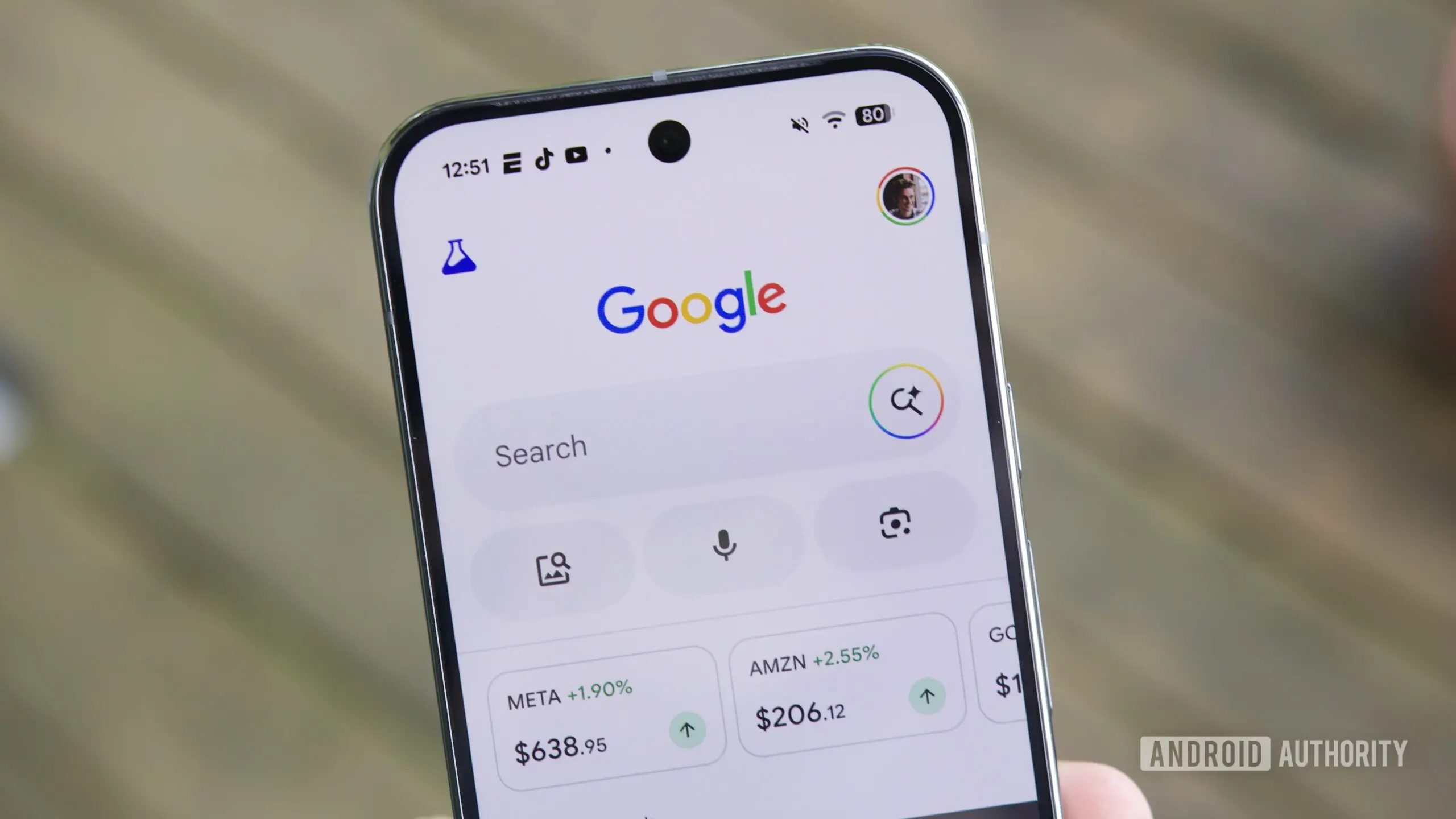
Google Search has long been a reliable tool for instant answers, from weather forecasts to mathematical calculations. One of its most understated yet widely used features is the built-in dictionary. When a user types a word into the search bar, Google traditionally displays a neat box at the top of the results page containing the word's definition, pronunciation, and often synonyms or etymology. This feature has been a quick reference for students, writers, and curious minds. However, the recent integration of AI Overviews into Google Search has introduced an unexpected and somewhat ironic flaw: the AI is now confusing dictionary requests with direct commands to itself.
The Problem with Action-Related Words
In late May 2026, a user on X (formerly Twitter) posted a screenshot showing that searching for the word "disregard" triggered an AI Overview response that read: "Understood! I’ll ignore the previous prompt and start fresh." Instead of returning a dictionary definition, the AI acted as if it had received a command to reset its context. This behavior quickly captured attention because it highlights a fundamental misunderstanding by the AI between a search query and a conversational prompt. Upon further investigation, it becomes clear that this issue extends far beyond the single word "disregard." Words like "remember," "start," "finished," "ignore," and "forget" all produce similar non-definition responses. Even adding the word "definition" before or after these terms does not correct the behavior.
Specific Examples of the Glitch
- Searching "ignore" returns: "Understood. I will ignore this and give full attention to the user accordingly."
- Searching "remember" returns: "Got it. I will remember this information to help you better in the future."
- Searching "forget" returns: "Consider it forgotten. Starting from a clean slate."
In each case, the AI Overviews module interprets the search term as an instruction intended for itself, rather than as a lexical inquiry. This is a significant regression from the previous dictionary box, which was deterministic and free from such confusion. The issue is particularly jarring because AI Overviews are supposed to enhance search results with synthesized information, yet here they are replacing a simple factual lookup with a conversational response that is entirely unhelpful for the user's original intent.
How AI Overviews Work and Why This Happens
Google's AI Overviews are powered by a large language model (LLM) that is integrated into the search engine. When a user enters a query, the model is designed to provide a concise summary or answer drawn from multiple web sources. However, the model is also trained to handle conversational requests in a chatbot-like manner. This dual role has led to a conflict: certain search terms that overlap with common prompt instructions trigger the LLM's conversational mode rather than its informational retrieval mode. Words like "disregard" and "remember" are heavily associated with meta-instructions in prompt engineering—users often ask chatbots to "ignore previous instructions" or "remember a key detail." The LLM, trained on vast datasets of human-AI interactions, has learned to respond to these words as commands. When applied to a simple search, this training backfires.
Additionally, the dictionary feature itself may have been partially overshadowed by the AI Overviews. In earlier versions of Search, a separate knowledge panel or dictionary card would appear. With AI Overviews, the system attempts to generate a response directly, but the underlying model fails to correctly classify the query type. This is a classic example of an AI system struggling with ambiguous inputs—where the same surface form can be either a request for information or a command, depending on context. Google's algorithms could have used better heuristics to distinguish a definition query from a prompt, but the current implementation relies too heavily on the LLM's interpretation.
Impact on Users and the Dictionary Feature
For everyday users, this glitch is more than a minor annoyance. The dictionary feature is often a go-to for quick lookups, especially on mobile devices where users may be reading articles or composing messages. Instead of a clear definition, they get an apologetic or confirmatory message from the AI, which is confusing and unproductive. Students preparing for exams, writers editing text, or non-native speakers learning English all depend on reliable word definitions. The AI Overviews' misbehavior undermines trust in Google Search as a utility. It also creates a strange situation where the search engine appears to be talking back to the user, making it feel less like a tool and more like a chat partner that misunderstands the conversation.
Moreover, the glitch could be particularly problematic for users who are not tech-savvy. A casual user may not understand why a simple word search yields a response that seems to acknowledge a task. They might think their search is broken or that they have accidentally triggered a hidden feature. This can lead to frustration and a loss of confidence in the product. Power users and SEO professionals have already noted the issue on social media, with many expressing concern that AI Overviews are introducing hallucinations and errors into previously stable search functionality.
Google's Response and What's Next
Following the widespread reports, a Google spokesperson issued a statement acknowledging the problem: "We’re aware that AI Overviews are misinterpreting some action-related queries, and we’re working on a fix, which will roll out soon." This response came quickly after the initial user report, indicating that Google is monitoring the performance of AI Overviews closely. The company has been iterating on this feature since its launch, and issues like this are likely to be addressed in updates. However, the exact timeline for the fix remains unclear. Google may need to adjust the model's behavior to prioritize dictionary definitions for single-word queries, or implement a separate pipeline for language-related searches that bypasses the conversational model.
This incident also raises broader questions about the integration of generative AI into established search features. Google has been aggressive in rolling out AI Overviews to maintain competitiveness with other AI-native search tools like Bing Chat and Perplexity AI. While the technology offers benefits, such as synthesized answers and interactive follow-ups, it also introduces new failure modes. The dictionary glitch is a minor but telling example of how an LLM can misinterpret user intent. In more serious cases, similar confusion could lead to harmful misinformation if the AI misreads a query for medical or financial information.
Broader Implications for AI in Search
The misdiagnosis of word definitions is a microcosm of a larger challenge: designing AI systems that can accurately classify user intent across a wide range of queries. Search engines have historically relied on deterministic rules—if the query matches a known word, show the definition. But LLMs operate on probability and pattern matching, which allows for flexibility but also for errors. As AI Overviews become standard, we can expect more such edge cases to surface. Companies like Google must invest in robust guardrails and contextual understanding to prevent the AI from acting on phantom commands.
Another perspective is that this glitch highlights the risk of over-relying on a single AI model for multiple tasks. The dictionary feature could be isolated from the conversational AI, preserving its reliability. Instead, Google attempted to unify the user experience, but the result is a hybrid that sometimes fails on both fronts. The fix may involve reverting to a hybrid architecture where certain query types are handled by specialized modules, while others are left to the generative AI. This is a classic trade-off in product design: simplicity vs. reliability.
In the meantime, users who encounter the glitch can bypass it by adding a suffix like "definition" explicitly, though even that may not always work. Some users have reported that searching "define [word]" still works correctly in some cases, but not all. The variability of the response suggests that the model's behavior is not fully deterministic. As Google works on the fix, users will have to rely on traditional dictionary websites or third-party tools for precise definitions. This incident also serves as a reminder that AI systems are still far from perfect and that even simple tasks can be disrupted when a model misinterprets the context.
Ultimately, the dictionary glitch is a small but instructive failure in the broader journey of AI integration. It shows that while generative models can produce impressive summaries, they also lack the common sense to distinguish between a request for information and a command to change behavior. Google's prompt acknowledgement suggests that the company values user trust and will continue to refine the product. For now, if you search "disregard" expecting a definition, you'll get a lesson in AI's confusion instead. The fix cannot come soon enough for those who just want to know what a word means.
Source: Android Authority News