

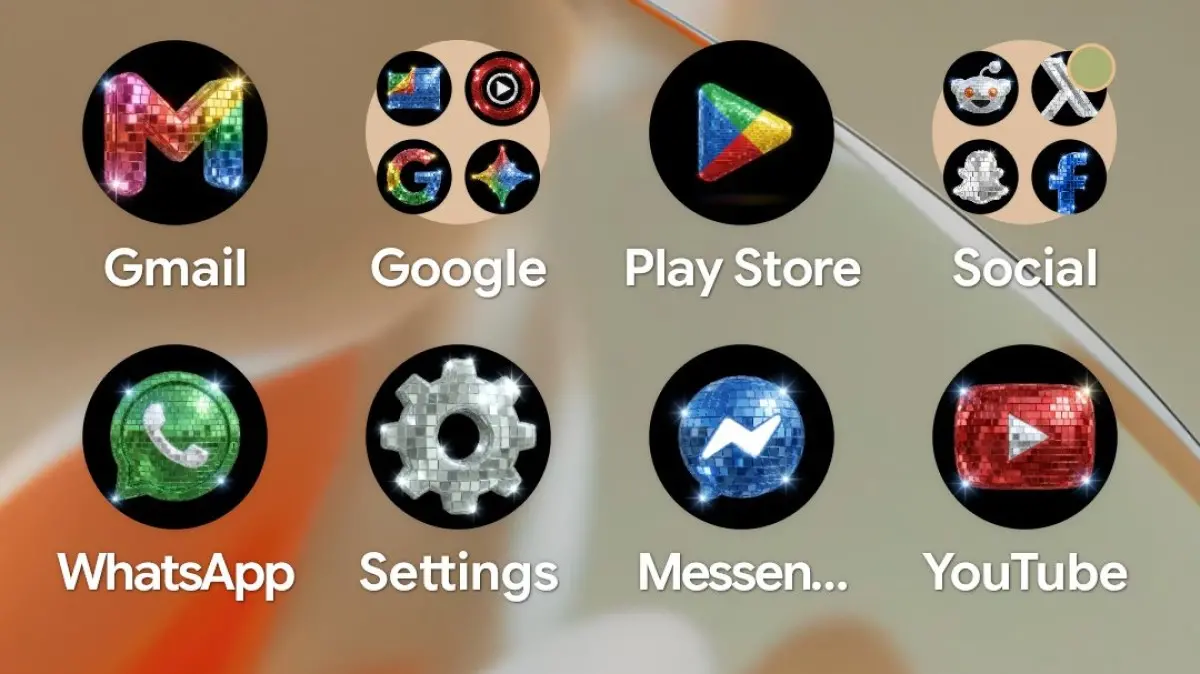
Disco has been a cultural flashpoint for decades, sparking both devotion and derision. In the smartphone world, the debate recently reignited when Spotify temporarily swapped its iconic green icon for a shimmering disco ball. The reaction was mixed, but for Google, it was the perfect opportunity to lean into the trend. This week, the company made disco ball-inspired app icons official for Pixel phones, turning a viral joke into a full-fledged Pixel Launcher feature.
The journey began late last week when designer Race Johnson of Pixly created a set of disco-ified icons for popular apps like Spotify, YouTube, and Instagram. The sparkly, mirror-ball effect immediately caught the eye of Android head Sameer Samat, who teased the possibility of an official icon pack on social media. Within days, that tease became reality: Samat announced that Android's disco icons were now live as a custom style preset in the Pixel Launcher. The speed of the rollout surprised many, highlighting the flexibility of Google's launcher customization system.
Unlike traditional icon packs that require a separate download and installation, these disco icons are built directly into the Pixel Launcher's theme engine. Users can switch to the 'Disco' style by going to the launcher settings, selecting 'Styles & Wallpapers,' and choosing the new preset. The effect applies a subtle but unmistakable disco ball shimmer to every app icon on the home screen. Google's Dieter Bohn took the trend even further, sharing a home screen themed around 'Sisko Frisco Disco Fresco' – a playful nod to 'Star Trek: Deep Space Nine' and the 1970s discotheque craze. The layout featured iconic deep space images and a carefully arranged icon grid, demonstrating the creative potential of the new style.
The disco icon fad taps into a deeper nostalgia for the 1970s, a decade defined by wide lapels, polyester suits, and the rise of dance club culture. Disco music itself became a symbol of liberation for marginalized communities, though it also faced a violent backlash, most famously at Chicago's Disco Demolition Night in 1979. For many younger smartphone users, the disco ball emoji is simply a fun and kitschy symbol. Google's decision to embrace the trend shows a willingness to participate in lighthearted internet culture, especially following the excitement of Google I/O 2024, where the company showcased a range of AI and Android updates. The timing suggests the team is still riding that energetic wave.
From a technical perspective, the implementation underscores a key advantage of Android's customization architecture. Pixel Launcher already allowed users to choose between themed icons, which adapt to the wallpaper's color palette, and a set of basic shapes. Adding a new 'Disco' preset was straightforward, as it simply applies a uniform effect across all icons without requiring individual app support. This might pave the way for more fanciful icon themes in the future, from neon glows to retro pixel art. Artem Russakovskii noted that the disco style is not a separate APK but a server-side update to the Pixel Launcher, enabling rapid deployment.
User reaction has been predictably varied. Some Pixel owners adore the playful aesthetic and have shared screenshots of their disco-fied home screens on social media. Others find the effect distracting or garish, preferring the clean simplicity of Google's Material You design language. A few users have expressed concern that the trend trivializes the product's functionality, but most see it as a harmless bit of fun. The viral nature of the disco icons has also brought renewed attention to Pixel Launcher's customization options, which often go unnoticed by casual users. With Google promising more custom icon themes in the pipeline, the disco style might be just the beginning of a new era of expressive home screens.
Beyond the icons themselves, the story reflects a broader shift in how tech companies engage with internet trends. In the past, such a niche fad would likely have been ignored. Today, companies like Google watch social media closely and are willing to move quickly to delight their audience. The disco icons were created within the span of a few days, from fan creation to official release. This agility is possible because of the modular nature of Android's launcher system and the company's culture of encouraging playful side projects. Google employees often joke that the Android team has a 'toys' unit devoted to lighthearted features. The disco icons certainly feel like a toy, but one that is well-engineered and easy to use.
For Pixel users who want to try the style, the process is simple. Long-press on any empty area of the home screen, tap 'Wallpaper & style,' and then select 'Icon style.' The disco preset should appear among the options if the Pixel Launcher has been updated to the latest version. Google recommends restarting the launcher if the option does not appear immediately. Once applied, every standard app icon receives a mirror-ball sheen with animated reflections when the phone is tilted. The effect is subtle enough that it works well on both light and dark wallpapers, though it especially pops against dark backgrounds. Users can switch back to the default style at any time without losing app layouts or widgets.
The broader implications for Android customization are significant. Google has long been criticized for limiting home screen personalization compared to third-party launchers like Nova Launcher or Action Launcher. However, the quick release of the disco icons demonstrates that the Pixel Launcher is becoming a platform for expressive themes. It opens the door to seasonal icon packs, limited-edition collaborations with artists, and even branded themes tied to movies or games. This move could encourage more developers to create themes for the Pixel Launcher, expanding the ecosystem. For now, the disco icons remain exclusive to Pixel devices running Android 14 or later, but there is hope that the feature might eventually reach other Android phones via the Google Play Services.
In summary, the disco icon trend represents a perfect storm of cultural nostalgia, social media virality, and technical agility. Google's decision to officially support the fad shows that the company is listening to its users and willing to have fun. While not every user will embrace the sparkly aesthetics, those who do can now bring a piece of 1970s dance floor energy to their daily pocket computer. The disco ball spins on, and for Pixel owners, the party is just getting started.
Source: Android Authority News